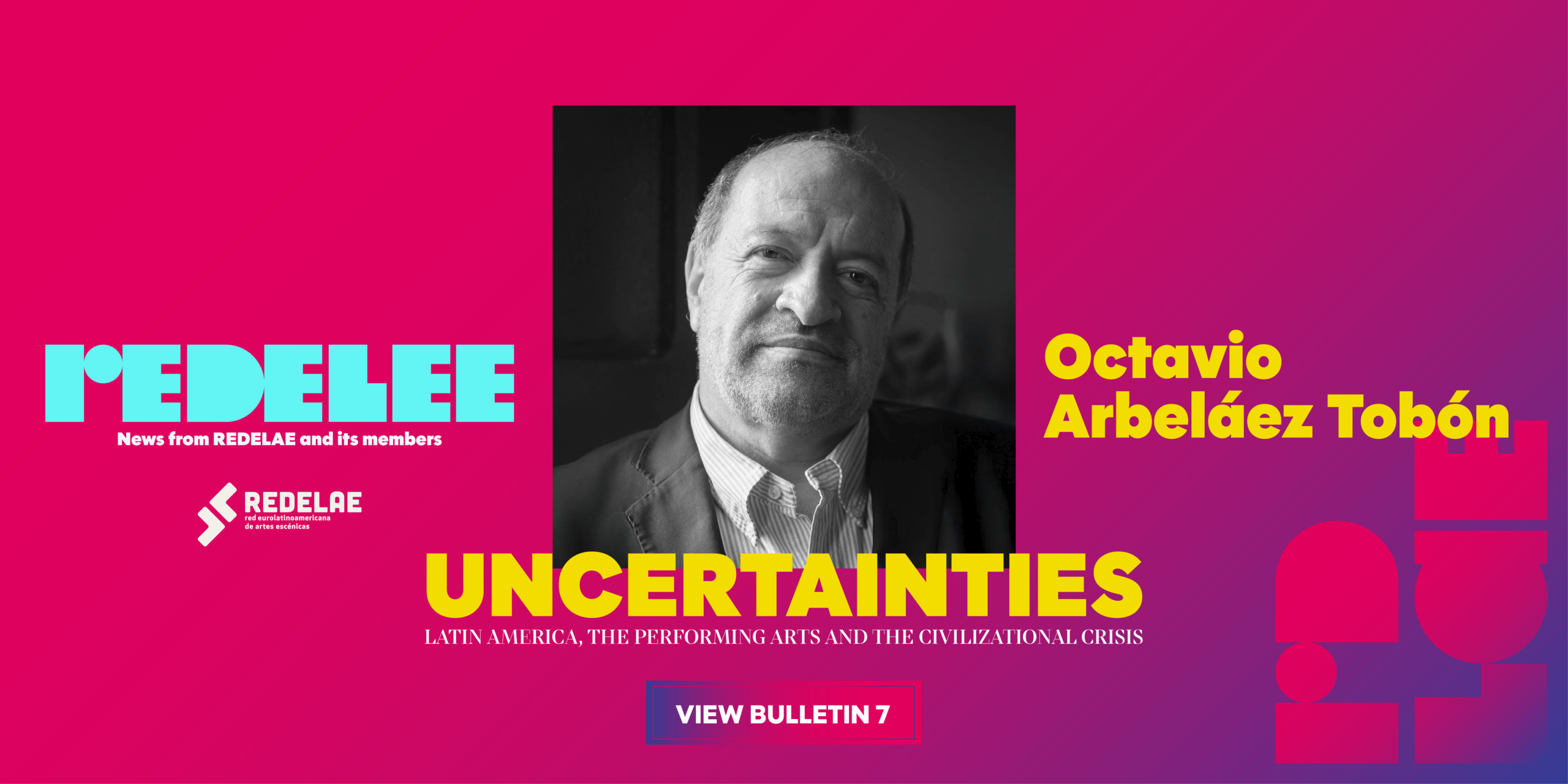
The essential political dilemma of the state of the contemporary world lies in the tension between peace, dialogue and legality, as well as in the meaning of our species and its survival; that is, a politics oriented towards life and democracy. Yet this meaning is diluted amid obsessions with power, control and possession. The indifference displayed by numerous nations, organisations, institutions and leaders is reminiscent of that observed in 1913 or 1933, when attention was focused on the most immediate issues while millions of people were unknowingly marching towards death. Today, this is expressed in the anomie of long-term policies and a grave anaemia of historical memory, which will be remembered in the years to come as one of the turns that led us into the global quagmire. The lack of awareness of the gravity of current events is, moreover, a cultural, ethical and rationality vacuum that persists amid a sea of spectacle-driven news. Moral collapses throughout the long human saga conspire when extreme geopolitical power tensions coincide with internationally influential elites lacking a global vision, within psychosocial frameworks of apathy bordering on hedonism and intellectual ennui associated with insensitive academics, as is happening today on an international scale.
To paraphrase Aristotle’s Poetics, one could say that the difference between the historian and the poet is that the historian records what happened, while the poet records what could or may happen. Poetry thus takes flight into the impossible, while history is anchored in facts which, however complex, are narrated in their material reality. In this twenty-first century, we know with astonishment that the possible and the impossible are conspiring in the same upheaval and civilizational crisis. Its immediate history and prospects for violence have unsettled a large part of the social sciences and humanities, as well as the creative field of the performing arts, confining them to analyses of current circumstances. Even so, the most insightful studies and writings of our time speak from perplexity and doubt, not from certainties and dogmas.
The end of certainties marks the possible beginning of other ways of narrating reality through dramatic discourse. Peace receives little emphasis, and coexistence in diversity even less. From other perspectives, liquid worlds and uncertainties, chance and indeterminacy, emergencies and ruptures are conceptualised through a kind of creative perplexity in the performing arts, which no longer sees history as a grand narrative or as the mechanism of the political destiny of humankind.
For this reason, we must strengthen these spaces in which the concept of theatre as a polemical and argumentative form of knowledge, active and provocative, is slowly taking shape. A place where everything is studied, every issue is debated, and argument is the basis of dialogue and respect. A world without the critical perspectives that emerge from theatre would exhaust its vision of humanity, replacing walking with aimless wandering and knowledge with the routine of bureaucratic creation.
In this context, Latin American theatre emerges not as a comforting refuge but as a laboratory of symbolic resistance. Latin America is itself a civilisation forged in the tension between memory and oblivion, between utopia and tragedy, between the word that liberates and the silence that oppresses. Historically, its dramaturgies have known how to inhabit this fracture: turning the stage into a tribunal of collective conscience when real courts remained silent, and building beauty where barbarity had swept everything else away.
It is no coincidence that, during the darkest moments of twentieth-century Latin America — dictatorships, exiles and disappearances — theatre was one of the few languages capable of naming the unnameable. From Augusto Boal’s Theatre of the Oppressed to the Colombian collective creations that shook the continent in the 1970s and 1980s, and including the dramaturgies that emerged from mourning and resistance in Chile, Argentina, Colombia and El Salvador, Latin American theatre developed a poetics of emergence: it learned to create under adverse conditions, to turn precariousness into a method and urgency into an aesthetic form.
Uruguay occupies a distinctive place in this tradition. It is a small country in territorial terms, yet extraordinarily rich in its theatrical culture. It has given the world not only leading playwrights and directors, but also a conception of theatre as a democratic practice rooted in community life. Uruguayan Carnival — the longest in the world — is also the most theatrical: in its tablados and murgas beats a philosophy of popular criticism that no decree has been able to silence entirely, because it lives in the people’s voices and in their ability to laugh at power while naming it. Murga is not merely music and costume; it is a way of exercising citizenship through the body, of practising memory with irony and dissent through song.
Teatro El Galpón, a living symbol of this history, survived exile during the civic-military dictatorship and returned transformed, more conscious of its purpose. That episode encapsulates something essential about Uruguayan theatre: its conviction that the stage cannot be indifferent to the time around it; making theatre is also a way of taking a position in relation to history, not through propaganda but through the complexity of the human experience. Among the key figures and institutions in this story are the great reference of our America, Atahualpa del Cioppo, Teatro Circular, Comedia Nacional, Complot Teatro, Roberto Suárez, Sergio Blanco, Gabriel Calderón, Santiago Sanguinetti, Marianela Morena and Mariana Percovich, among other Uruguayan theatre-makers present at Colombian festivals.
Today, as the world witnesses a new accumulation of dangers reminiscent of — as Gramsci observed — those moments when the old has not yet died and the new has not yet been born, Latin American and Uruguayan theatre face their own creative dilemma: how to speak about crisis without reducing themselves to its chronicle; how to be contemporary without losing historical perspective; how to keep political imagination alive when media spectacle drains words of meaning. The answer, if there is one, will not come from doctrinal certainties but from that same creative perplexity which the text identifies as a condition for the most lucid forms of knowledge of our time. For Latin American theatre knows something that many institutions have forgotten: the deepest reality is not conveyed through data or slogans, but in the unique, unrepeatable instant when two human beings — one who acts, the other who watches — recognise one another in their fragility and in their desire for a world. That recognition is still a form of politics. And perhaps it contains theatre’s oldest and most urgent possibility: not to describe the global quagmire, but to imagine, from within it, the conditions for reaching another shore.